
Tenant guide · Updated November 2026
How to Rent Property in Phuket
Everything you need to rent a condo, house or pool villa long term in Phuket in 2026: what it costs, what you pay upfront, what the lease must say, the rules that protect tenants, and the TM30 and visa paperwork that comes with living here.
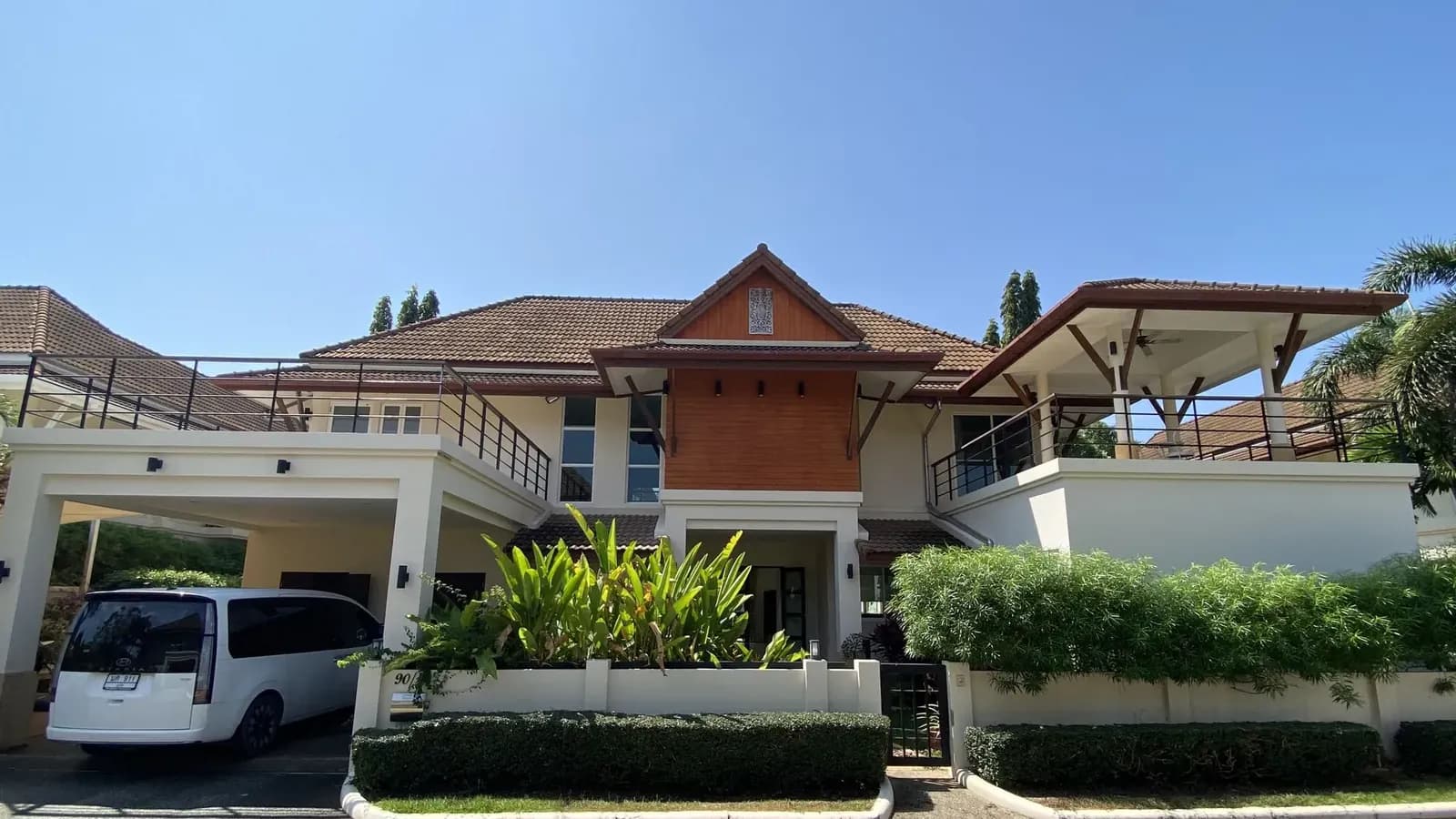
A family house for rent in Koh Kaew, from our listings
Section 1
How does renting in Phuket work?
A long-term rental in Phuket is usually a furnished lease of 6 to 12 months; 12 months gets the lowest monthly rate. On signing you pay two months’ rent as a refundable deposit plus the first month in advance, utilities are billed on top, and the agent’s fee is paid by the owner. Your landlord must report your address to Immigration on a TM30 within 24 hours, and renting does not give you a visa.
Phuket has a deep long-term rental market — condos around Bang Tao, Surin, Kamala and Patong, houses in Chalong, Koh Kaew and Phuket Town, and pool villas from Rawai to Layan — and most homes are offered move-in ready. The practical risks are not about finding a place but about the paper: who you are really renting from, what the electricity rate is, what the lease says about repairs and early exit, and whether your deposit comes back.
This guide follows the order of a rental, from choosing the type of lease to getting your deposit back, with the legal points that matter to a foreign tenant. For villa prices area by area, see our long-term villa rentals guide; for a full monthly budget, our cost of living guide.
Rents are the indicative ranges from our long-term villa rentals guide; utility rates and visa rules are those in our cost of living and visa guides, with their sources. The legal points reflect the Civil and Commercial Code, the Immigration Act and the residential lease notification in force for contracts signed since 4 September 2025.
Section 2
Long-term lease, monthly stay or holiday let?
The length of your stay decides both the price and the legal framework. Twelve-month leases are the residential norm; anything under 30 nights is legally a hotel stay.
Long-term lease (6–12 months or more)
A residential lease, usually furnished, at the lowest monthly rate — especially on 12 months, which guarantees the owner year-round occupancy. Deposit, advance rent and utilities follow the standard 2 + 1 model described below.
Monthly stays and holiday lets
One to a few months costs more per month, particularly over the high season, roughly November to March. Stays under 30 nights are a hotel business under the Hotel Act B.E. 2547, and many condo buildings ban them in their regulations.
| Property type | Indicative monthly rent (long term) | Typical tenant |
|---|---|---|
| 1-bed condo / apartment | ฿20,000–40,000 | Singles and couples, remote workers |
| 2-bed condo / small house | ฿35,000–70,000 | Couples, small families |
| 3-bed pool villa | ฿60,000–150,000 | Families, long-stay retirees |
| 4+ bed luxury pool villa | ฿150,000–400,000+ | Larger families, high-end relocations |
Ranges are indicative and move with the area, the view, the condition and the season: the south and centre (Rawai, Chalong, Kathu) are the best value, the west-coast beaches (Bang Tao, Surin, Kamala, Layan) the most expensive. Our Phuket rent index publishes median asking rents by area and size from live listings.
Section 3
What does renting cost, upfront and every month?
Plan for three months of rent on signing — two months’ refundable deposit plus one month in advance — then the rent and the bills each month. Electricity is the line that surprises tenants: the official PEA tariff is roughly ฿4.0–4.6 per kWh all-in, but many landlords bill ฿7–9 per unit through their own meter.
| Cost | Typical amount | What to check |
|---|---|---|
| Security deposit | 2 months’ rent | Refund conditions and timing written into the lease |
| Advance rent | 1 month | Paid before move-in; get a receipt |
| Agent fee | Paid by the owner | Free for tenants when the agent is paid by the landlord |
| Electricity | ≈ ฿4.0–4.6/kWh at the PEA tariff; ฿7–9 on many landlord meters | Whose name the meter is in and the rate per unit |
| Electricity, pool villa with A/C | ≈ ฿5,000–15,000 a month | Pool pump hours and the number of A/C units |
| Water | Low; PWA tariff for Phuket | Mains or well, and the rate charged |
| Fibre internet | ≈ ฿600–1,000 a month | Whether a line is installed and in whose name |
| Pool and garden care (villas) | Often included in the rent | Who arranges it and how often staff come |
| Condo common fees | Billed to the owner by the building | That the rent is quoted with no extra service charge |
As an example, a villa at ฿60,000 a month means ฿180,000 on signing: ฿120,000 of refundable deposit plus ฿60,000 for the first month. Ask for a direct PEA meter in your name, or negotiate the landlord’s rate before you sign; on a pool villa with air-conditioning, the difference between ฿4 and ฿8 a unit adds up quickly.
Section 4
The rental process, step by step
Renting long term in Phuket can be done in a week or two once you are on the island: brief, shortlist, view, agree terms, sign the lease with an inventory, pay, and move in with the TM30 filed.
Step 1Before you arrive
Set the brief
Budget including bills, areas, bedrooms, lease length, move-in date and must-haves: pool, pets, schools, a home office with fibre.
Step 21–2 weeks
Shortlist and verify
Get a shortlist of available homes and ask who the owner is. A genuine landlord or agent can show a copy of the title deed or condo title and the owner’s ID or written authorisation.
Step 3In person or by video
View
Test the A/C, water pressure and internet, run the taps and the pool pump, look for damp and check the neighbourhood at night and in heavy rain if you can.
Step 4Before signing
Agree the terms in writing
Rent, term, deposit, utility rates, what is included, pets, repairs and early exit. If the owner asks for a booking deposit, get a receipt stating what happens to it if the lease is not signed.
Step 5Signing day
Sign the lease and the inventory
Sign a bilingual lease and a dated condition report with photos, signed by both sides. Leases over three years must be registered at the Land Office.
Step 6Signing day
Pay deposit and first month
Pay by bank transfer where possible and keep every receipt. Cash with no receipt is the hardest money to recover.
Step 7Within 24 hours
Move in and register your address
Collect keys, read the meters together and make sure the landlord files the TM30 with Immigration. Keep a copy of the receipt for your 90-day report and visa extension.

Section 5
What should a Phuket rental contract include?
A good lease names the owner and the property, fixes the rent, term and deposit, sets the utility rates and the repair split, and says exactly how either side can end it. Anything agreed verbally that is not in the contract will be hard to rely on later.
Thai law asks little formality for an ordinary lease. A lease of immovable property needs written evidence signed by the party liable, and a lease of more than three years is enforceable for three years only unless it is made in writing and registered at the Land Office (Civil and Commercial Code, section 538); registration costs a 1% fee plus 0.1% stamp duty on the total rent. If the owner sells during your lease, the lease continues and the buyer takes over the landlord’s rights and obligations (section 569).
Written leases are also subject to stamp duty of ฿1 for every ฿1,000 of rent over the whole term, under the Revenue Department’s stamp duty schedule. It is a small amount, but an unstamped lease cannot be relied on as evidence in a civil case until the duty and surcharges are paid, so ask whether the contract has been stamped.
Section 6
What rules protect tenants in Thailand?
Since 4 September 2025, landlords who let three or more residential units to individuals must use leases that follow the Contract Committee’s 2025 notification. It caps deposits, sets deadlines for returning them and bans utility mark-ups. A private owner letting one villa is usually outside its scope, but its terms are a fair benchmark to negotiate.
| Rule (lessors with 3+ units) | What it means for you |
|---|---|
| Deposit and advance rent capped | No more than three months’ rent in total when rent is paid monthly |
| Deposit returned on time | Immediately at the end of the lease, or within 7 days after inspection (14 days if repair costs are deducted) |
| No deduction for normal wear and tear | Deductions only for damage the tenant caused |
| Utilities at official tariffs | No mark-up on electricity and water; written invoices before the due date |
| No rent change during the term | Rent and service charges are fixed until the lease expires; no renewal fee |
| Notice before termination | At least 30 days’ written notice from the landlord, except for serious breaches |
| Early exit for the tenant | After at least half the term, the tenant may end a fixed-term lease with 30 days’ notice |
| Condition report | A move-in report signed by both sides forms part of the lease |
The notification applies to lessors with at least three units; hotels and dormitories are excluded. If your landlord owns one or two homes, the lease itself sets the rules — so ask for the same protections in writing: a dated return of the deposit, utilities at the official rate and a signed condition report.
Section 7
How do you get your deposit back?
Deposits are lost on evidence, not on law. A signed inventory with photos at move-in, receipts for every payment and a joint inspection at move-out settle almost every dispute.
Section 8
TM30, 90-day reports and visas for tenants
When a foreigner stays at a property, the house master, owner or landlord must notify Immigration within 24 hours on a TM30 (Immigration Act, section 38). As a tenant you supply your passport details and keep the receipt: Phuket Immigration asks for it with 90-day reports and visa extensions.
Fines in the ฿800–2,000 range are commonly cited for a missing TM30, and the bigger cost is practical: without it, your 90-day report or extension can be refused until the address is registered. Since a June 2020 Royal Thai Police notification, the same tenant returning to the address within the declared stay no longer needs a new form. Ask your landlord, condo office or agent to confirm who files it before you sign.
The 90-day report is your own obligation: every 90 days of continuous stay, online, by post or at Phuket Immigration in Phuket Town. It is free; leaving the country resets the count. Your lease serves as proof of address for the report and for a yearly extension of stay.
Renting, like owning, gives no right to stay. Visa-exempt tourist stays have been cut to 30 days since 15 September 2026, so anyone renting long term needs a proper long-stay visa, such as the Destination Thailand Visa, a retirement extension, the LTR, or an education or work visa. Our visa guide compares them.
Section 9
Common renting mistakes, and how to avoid them
Most tenant problems in Phuket come from a handful of avoidable shortcuts.
Paying before seeing the owner’s papers
Listings are sometimes re-posted by people with no right to let the home. Ask for the title deed or condo title copy and the owner’s ID or written authority.
Not asking the electricity rate
At ฿7–9 per unit instead of the PEA tariff, a pool villa’s bill can nearly double. Get the rate in the lease.
Skipping the inventory
Without a signed, photographed condition report, every mark at move-out becomes your word against the owner’s.
Assuming holiday letting or pets are fine
Condo regulations often ban pets and stays under 30 days; get written permission before you sign.
Ignoring the rainy season
Some low-lying streets flood in heavy rain and older homes suffer from damp. View in a downpour or ask the neighbours.
Leaving the TM30 to chance
Agree who files it before you move in and keep the receipt; you will need it at Immigration.
Section 10
Renting before buying in Phuket
Renting for six to twelve months is the best way to choose an area before you buy: you learn the traffic, the noise, the rainy season and the school run before you commit to a title deed.
If you then decide to buy, a foreigner can own a condo freehold within the building’s 49% foreign quota, or hold a villa through a registered 30-year lease on the land. Our buying process guide explains the steps from reservation to the Land Office, and our foreign ownership guide the legal routes.
This guide is general information, not legal, tax or immigration advice. Rents and utility costs are indicative ranges, not quotes; lease terms vary by landlord and property. Rules reflect Thai law and practice as we understand them on 6 November 2026 — always confirm the full terms in writing before you sign, and check visa rules with Thai Immigration.
FAQ
Renting in Phuket — your questions
Short answers to what tenants ask us most.
Find your home
Rent long term in Phuket, with the paperwork done right
Tell us your budget, areas and dates. We show you homes with the electricity rate, inclusions and deposit terms stated upfront, check the owner’s papers, and make sure the lease and TM30 are in order — free for tenants.
Sources
The legal texts, official sources and analyses this guide relies on (checked 6 November 2026). English translations of Thai statutes are unofficial; the Thai text prevails.
- Thailand strengthens controls on residential lease contracts (Contract Committee notification B.E. 2568) — Tilleke & Gibbins (in force for leases signed from 4 September 2025)
- Civil and Commercial Code, section 538 (written evidence and registration of leases) — Thai Law Online (unofficial translation)
- Civil and Commercial Code, section 569 (lease survives a transfer of ownership) — Thai Law Online (unofficial translation)
- Stamp duty schedule (lease of land and buildings) — The Revenue Department (official)
- Thai Immigration Bureau — Royal Thai Police (official; TM30, 90-day reports, extensions)
- Thailand relaxes rules on TM30 immigration requirements — Tilleke & Gibbins (Royal Gazette, 16 June 2020)
- New 30-day and 15-day visa exemption rules from 15 September — Tourism Authority of Thailand (1 September 2026)
- Thailand e-Visa portal — Ministry of Foreign Affairs of Thailand (official)
- Electricity Ft and tariff for September–December 2026 — The Nation (reporting the Energy Regulatory Commission) (12 August 2026)
- Water tariff table (Phuket, Samui, Phangan) — Provincial Waterworks Authority (official)
- Renting long-term in Phuket (landlord electricity rates) — Phuket101