
Visa guide · Updated 29 October 2026
Thai Visas for Property Owners
Buying a home in Phuket and living in Thailand are two separate legal questions. This guide answers the first thing every owner asks — how long can I stay? — then compares every long-stay visa open to you in 2026, with fees, conditions and how to apply.
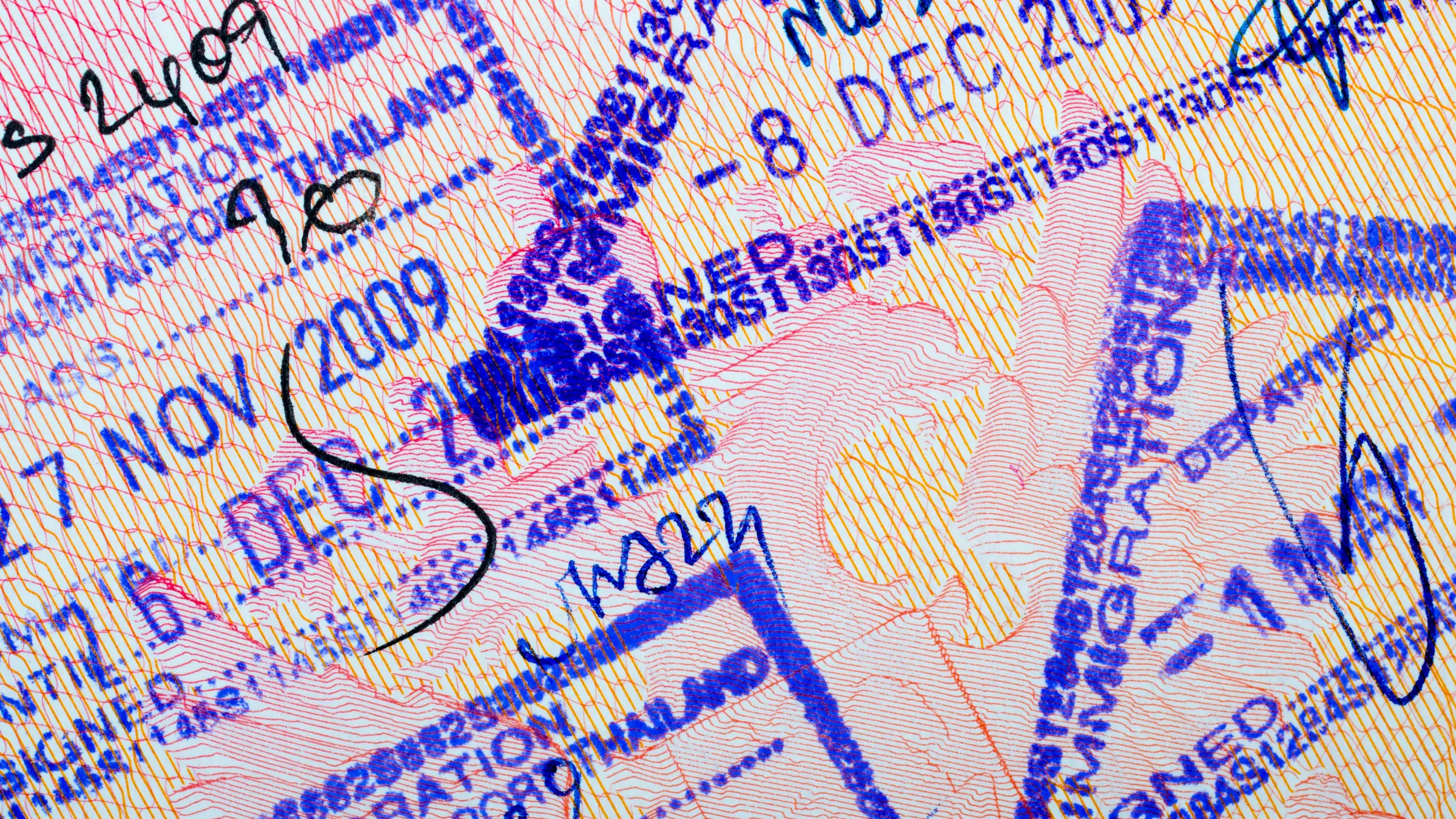
Thai entry and departure stamps in a passport
TL;DR
How long can you stay in Thailand if you own property?
Owning a condo or villa in Thailand does not, by itself, give you a visa or any right to live here. How long you can stay depends only on your visa: 30 days visa-exempt, one renewable year on the ฿3 million condo route or a retirement visa, 5–20 years with Thailand Privilege, or 10 years with an LTR.
Rules, thresholds and fees below are stated as of October 2026 and each one is linked to an official or legal source at the end of the page. Thai immigration rules change often — sometimes by internal order with little notice — so confirm with the Immigration Bureau, the Thai embassy handling your file or a licensed lawyer before you act.
The confusion is understandable: in many countries, buying a home opens a residence route. Thailand keeps the two apart. Who may own what is decided by the Land Code and the Condominium Act, handled by the Land Department; who may stay, and for how long, is decided by the Immigration Act, handled by the Immigration Bureau. A title deed in your name does not appear anywhere in the list of reasons for which a foreigner can be granted a stay.
In practice, an owner arriving without a visa is treated like any other tourist. Since 15 September 2026 that means a 30-day, tourism-only visa exemption for nationals of 60 countries and territories — including the UK, the US, France, Germany and Australia — down from the 60 days allowed before. Owning a ฿20 million villa does not add a single day.
What property can do is help you qualify for certain visas. A condo bought for at least ฿3 million is the qualifying asset of a one-year renewable route introduced in October 2025; Thai property can count toward the investment test of two LTR categories; and the money you have in a Thai bank, not the house, is what a retirement or marriage extension looks at. The rest of this guide explains each option.
| Your situation as an owner | Typical stay | Visa basis |
|---|---|---|
| Owner on holiday, no visa | 30 days per entry | Visa exemption (tourism only, since 15 Sept 2026) |
| Owner of a condo worth ฿3 million or more | 1 year, renewable | Non-immigrant stay under Immigration Orders 237/2568 and 238/2568 |
| Owner aged 50+ with ฿800,000 in a Thai bank | 1 year, renewable | Retirement extension (Non-O / O-A) |
| Owner married to a Thai national | 1 year, renewable | Marriage extension (Non-O) |
| Remote worker owning a holiday home | Up to 180 days per entry, over 5 years | Destination Thailand Visa (DTV) |
| Owner willing to buy a membership | 5 to 20 years (1 year per entry) | Thailand Privilege |
| Owner with US$1 million in assets | 10 years (5 + 5) | LTR Wealthy Global Citizen |
Comparison
Which visa suits a property owner? The 2026 comparison
For most Phuket owners the realistic choice is between a retirement extension (if 50 or over), the ฿3 million condo route, a Thailand Privilege membership, the DTV for remote workers and, for the wealthiest, the 10-year LTR. Only the condo route and the LTR give your property a formal role in the application.
| Visa | Length of stay (official cost) |
|---|---|
| Visa exemption | 30 days per entry (Free · tourism only) |
| ฿3M property route | 1 year, renewable (฿1,900 per extension, plus visa fee) |
| Retirement (Non-O / O-A) | 1 year, renewable (฿1,900 per yearly extension) |
| Destination Thailand Visa (DTV) | 5 years (≈ ฿10,000 · up to 180 days per entry) |
| LTR Wealthy Global Citizen | 10 years (5 + 5) (฿50,000) |
| Thailand Privilege | 5–20 years (฿650,000–5,000,000 · 1 year per entry) |
Source: the comparison table below, as of October 2026. Government fees only; lawyers, agents, translations, insurance and travel are extra, and embassies abroad set their own visa fees.
| Visa | Main eligibility (2026) | Official cost | Duration | Can you work? | Link to your property |
|---|---|---|---|---|---|
| Visa exemption | 60 listed nationalities | Free | 30 days per entry | No | None |
| ฿3M property route | Condo of ฿3M+ in your name, or a qualifying rental; Ministry of Tourism and Sports letter | ฿1,900 per extension, plus visa fee | 1 year, renewable | No | Direct: the condo is the qualifying investment |
| ฿10M investment route | ฿10M+ in a condo, Thai deposit or government bonds, funds from abroad | ฿1,900 per extension | 1 year, renewable | No | A condo purchase can count |
| LTR Wealthy Global Citizen | US$1M in assets, of which US$500,000 invested in Thailand | ฿50,000 | 10 years (5 + 5) | Yes, with a work permit (digital work permit available) | Thai property can count toward the US$500,000 |
| LTR Wealthy Pensioner | Age 50+, US$80,000 passive income (or US$40,000 + US$250,000 invested) | ฿50,000 | 10 years (5 + 5) | Yes, with a work permit | Thai property can count toward the US$250,000 |
| Thailand Privilege | Membership; background check, no age limit | ฿650,000–5,000,000 | 5–20 years, 1 year per entry | No | None |
| Retirement (Non-O / O-A) | Age 50+, ฿800,000 in a Thai bank or ฿65,000 a month | ฿1,900 per yearly extension | 1 year, renewable | No | None — the deposit counts, not the home |
| Retirement 10-year (O-X) | Age 50+, 14 nationalities, ฿3M deposit (or ฿1.8M + ฿1.2M a year income) | Visa fee varies by embassy | 5 + 5 years | No | None |
| Marriage (Non-O) | Registered marriage to a Thai, ฿400,000 or ฿40,000 a month | ฿1,900 per yearly extension | 1 year, renewable | Yes, with a work permit | None |
| Destination Thailand Visa (DTV) | Remote work or "soft power" activity, ฿500,000 in savings | ≈ ฿10,000 (varies by embassy) | 5 years, up to 180 days per entry | Not for Thai employers or clients | None |
Costs are the government fees published or commonly charged in 2026; lawyers, agents, translations, insurance and travel are extra. Embassies abroad set their own visa fees in local currency, so the baht figure is a guide. Work is never allowed on a visa alone — even where a work permit is possible, it is a separate application.
The ฿3M route
The "฿3 million property visa": what it really is in 2026
The so-called ฿3 million property visa is not a new visa type but a one-year, renewable permission to stay, created by Immigration Bureau Orders 237/2568 and 238/2568 in force since 1 October 2025. It is open to a foreigner who owns a condominium unit worth at least ฿3 million in their own name and obtains a support letter from the Ministry of Tourism and Sports.
The route replaces, for property buyers, the older investment extension that required ฿10 million. That ฿10 million route — a condo, a fixed deposit in a Thai bank or Thai government bonds, funded from abroad — still exists and is the option for buyers of larger units who prefer to rely on the long-standing rules.
If you are buying with this route in mind, check three things before you sign: that the unit sits within the foreign freehold quota, that the price in the sale contract is at least ฿3 million, and that the purchase money arrives from abroad in foreign currency with the bank’s foreign exchange certificate — the Land Office needs it to register a foreign owner. Our buying process guide walks through each step, and our condos for sale page lists units with foreign quota available.
The orders were never published as a public English text and the Immigration Bureau has not issued a detailed guide. One law firm mentions follow-up Orders 145/2569 and 146/2569 dated 24 June 2026 whose content it could not obtain, and one developer claims the rental track has been paused. Neither point is confirmed by an official source as of October 2026: ask the immigration office or a lawyer to confirm the current conditions before you buy for visa purposes.
LTR visa
The 10-year LTR visa: when your property counts
The Long-Term Resident (LTR) visa gives 10 years of stay (an initial 5 years, extended by 5) for a ฿50,000 fee. Thai property counts as a qualifying investment in two of its four categories: up to US$500,000 for a Wealthy Global Citizen and US$250,000 for a Wealthy Pensioner earning US$40,000–80,000 a year, as of October 2026.
| LTR category | Who it is for | Financial test | Can property count? |
|---|---|---|---|
| Wealthy Global Citizen | Any age | US$1 million in assets, including US$500,000 invested in Thailand; no income test since February 2025 | Yes — freehold condo, house or villa, or a lease with at least 10 years left |
| Wealthy Pensioner | Age 50+ | US$80,000 a year in pension or passive income; or US$40,000–80,000 plus US$250,000 invested in Thailand | Yes, for the US$250,000 investment |
| Work-from-Thailand Professional | Remote employees of large foreign companies | US$80,000 a year (US$40,000 with a master’s degree) | No |
| Highly-Skilled Professional | Experts in BOI-targeted industries | US$80,000 a year (US$40,000 with a master’s degree in science or technology) | No |
For a Phuket owner, the LTR mostly makes sense above roughly ฿16–18 million (about US$500,000, depending on the exchange rate), or for retirees with solid pension income. Below that, the ฿3 million route or a retirement extension is simpler and cheaper.
Thailand Privilege
Thailand Privilege (formerly Elite): the 2026 packages
Thailand Privilege, the state-owned membership formerly sold as Thailand Elite, buys a long-stay visa for 5 to 20 years without any age, income or property test. As of October 2026 the official site lists five packages, from ฿650,000 for 5 years (Bronze) to ฿5 million for 20 years (Reserve, by invitation only). Members stay up to one year per entry.
| Package | Membership fee | Validity | Privilege points a year |
|---|---|---|---|
| Bronze | ฿650,000 | 5 years | 0 |
| Gold | ฿900,000 | 5 years | 20 |
| Platinum | ฿1,500,000 | 10 years | 35 |
| Diamond | ฿2,500,000 | 15 years | 55 |
| Reserve (by invitation only) | ฿5,000,000 | 20 years | 120 |
The fee is paid once; there is no annual membership charge. Each entry gives up to one year, extended in Thailand for the standard ฿1,900 immigration fee, and members get airport fast track and concierge help with immigration paperwork. The visa does not allow work, and it gives no special right to own land — members buy property under the same rules as any foreigner, explained in our foreign property ownership guide.
Bronze has repeatedly been announced as closing and then extended. Third-party reports dated 30 September 2026 say the operator extended Bronze to 31 December 2026; the official site still lists it but gives no closing date. Treat the cheapest entry point as uncertain beyond the end of 2026. Packages sold before October 2023 are discontinued for new members.
Retirement, marriage, DTV
Retirement, marriage and DTV visas for owners
Most owners who live in Phuket full time hold a one-year extension of stay, renewed every year at the island’s immigration office for ฿1,900. Retirees aged 50 or over qualify with ฿800,000 in a Thai bank or ฿65,000 of monthly income; spouses of Thai nationals with ฿400,000 or ฿40,000 a month. Remote workers can use the five-year DTV.
Retirement extension (Non-O or O-A)
฿800,000 in a Thai bank account in your own name, held for two months before you apply and three months after approval, never below ฿400,000 afterwards; or ฿65,000 a month of income; or a combination. Apply from abroad for an O-A (one year, with health insurance — ฿3 million or US$100,000 of cover at many embassies, ฿40,000 outpatient and ฿400,000 inpatient at others) or enter on a Non-O and extend in Phuket (no insurance rule for the extension). Work is prohibited.
Long-stay retirement (O-X)
For nationals of 14 listed countries aged 50 or more: ฿3 million in a Thai bank (or ฿1.8 million plus ฿1.2 million a year in income), untouched for a year and never below ฿1.5 million afterwards, plus health insurance. Granted for 5 years and renewable once.
Marriage visa (Non-O)
For the legally registered spouse of a Thai national, including same-sex spouses: ฿400,000 in a Thai bank or ฿40,000 a month of income, renewed yearly. Unlike retirement, it allows you to apply for a work permit.
Destination Thailand Visa (DTV)
5-year multiple entry, up to 180 days per entry. Usually extendable once by up to 180 days at immigration. Requires ฿500,000 shown on a 6-month bank statement and proof of remote work or a "soft power" activity such as Muay Thai or Thai cooking. Fee about ฿10,000, varying by embassy. No work for Thai employers or clients.
Note that your home plays no part in any of these files: what immigration checks is the money in the bank, your income, your marriage or your activity. A house is still useful in practice — your lease or title deed serves as proof of address, and a stable address makes the 90-day reports and yearly renewals far easier.
For the full monthly budget of living in Phuket on one of these visas — rent, utilities, health insurance and schools — see our cost of living in Phuket guide.
Owner obligations
Living here as an owner: 90-day reports, TM30 and re-entry permits
Whatever your visa, three routine obligations apply to long stays in 2026: report your address every 90 days (free; LTR holders once a year), make sure a TM30 address notification has been filed within 24 hours of moving in, and get a re-entry permit (฿1,000 single, ฿3,800 multiple) before travelling, or your extension lapses.
How to apply
How to apply: e-Visa abroad, extensions in Phuket
Visas are applied for online through the Thai e-Visa portal (thaievisa.go.th) before you travel, or for the LTR through the Board of Investment. Extensions, conversions, 90-day reports and re-entry permits are then handled in person at Phuket Immigration, 482 Phuket Road, Talat Yai, Phuket Town, open Monday to Friday, 08:30–16:30.
Step 1
Choose your route before you buy
If the property is meant to support your visa, check the route first: the ฿3 million condo track and the LTR both depend on how and in whose name the property is bought.
Step 2
Prepare your financial evidence
Open a Thai bank account early: retirement and marriage files need the money held for at least two months; the DTV needs a 6-month statement; the LTR needs 12 months of records for its US$100,000 option.
Step 3
Apply online from abroad
Submit the visa application on thaievisa.go.th, the portal used by Thai embassies worldwide; allow at least three weeks. LTR applicants first request a BOI endorsement on ltr.boi.go.th.
Step 4
Arrive and register your address
Complete the TDAC before landing. Once you move in, make sure your landlord, condo office or you as owner file the TM30 within 24 hours, and keep the receipt.
Step 5
Extend at Phuket Immigration
File the TM.7 extension form with passport copies, photos, bank letter and statement, title deed or lease and TM30 receipt. Pay ฿1,900 in cash. Arrive early: queues form before opening.
Step 6
Keep your status valid
Report every 90 days, take a re-entry permit before each trip, and renew in the final weeks before expiry, keeping your bank balance at the required level all year.
Where to go on the island
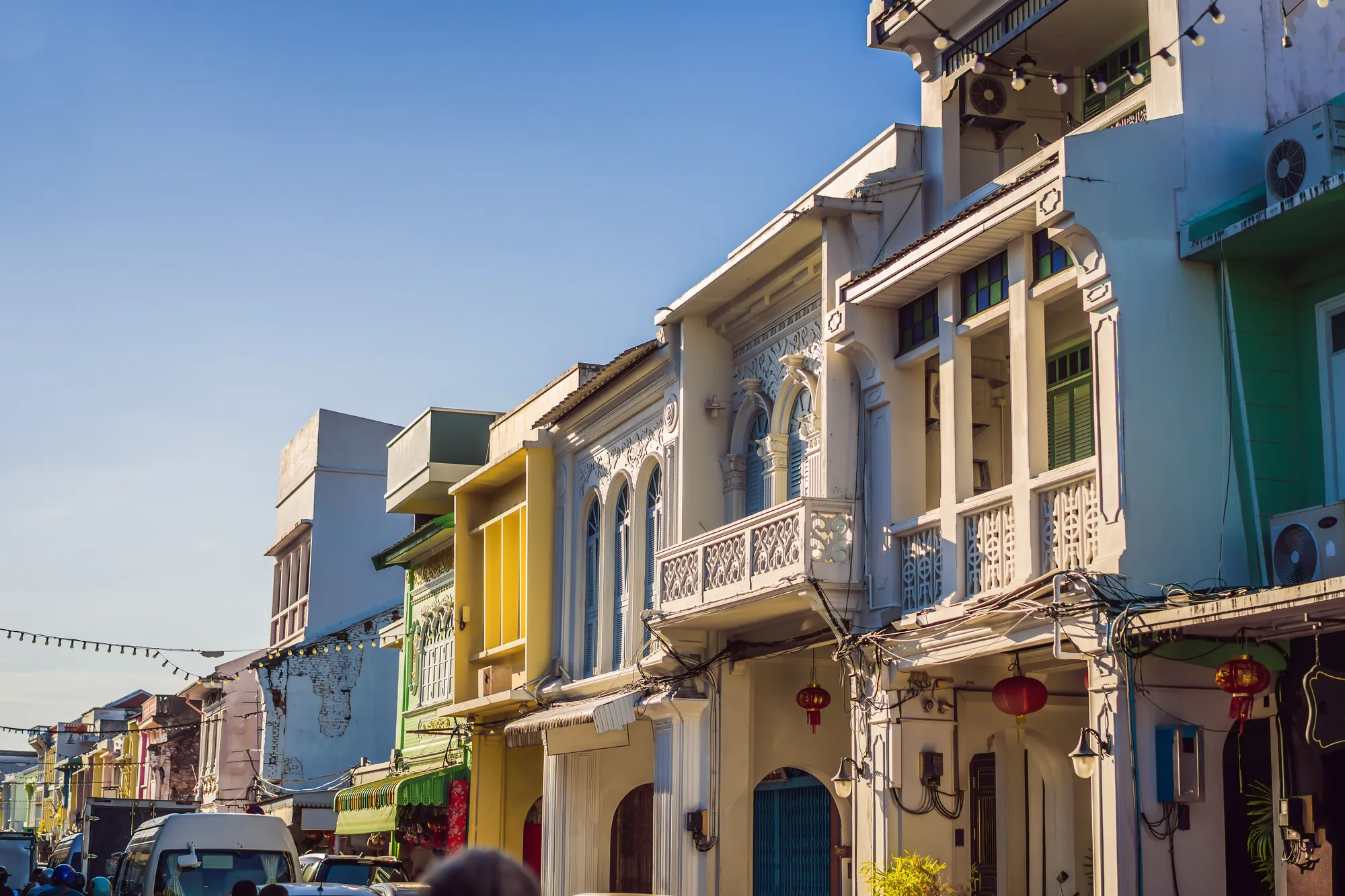
482 Phuket Road, Talat Yai, Mueang Phuket 83000, near Saphan Hin. Tel. 076 221 905. Monday to Friday, 08:30–16:30, closed at lunch, weekends and public holidays. Fees are paid in cash. It is the only full-service immigration office on the island; check hours before you go.
What to bring for an extension
Passport with 6+ months’ validity and copies of the photo, visa, entry stamp and departure card pages; two recent 4×6 cm photos; TM.7 form; Thai bank letter and updated passbook or statement; proof of address (title deed, condo ownership certificate or lease) and TM30 receipt. O-A and O-X holders keep their insurance certificate at hand.
Residency & tax
Permanent residency and tax residency
Permanent residency is possible after three consecutive years on one-year extensions, within a quota of 100 people per nationality a year, for ฿7,600 to apply and ฿191,400 if approved. Separately, staying 180 days or more in a calendar year makes you a Thai tax resident, and since 2024 foreign income you bring into Thailand can then be taxed.
| Topic | Rule as of October 2026 | What it means for owners |
|---|---|---|
| Permanent residence | 3 years on consecutive extensions; quota of 100 per nationality; Thai-language interview; ฿7,600 application, ฿191,400 on approval (฿95,700 for spouses of Thais) | Property is not a qualifying factor, and PR holders still cannot own land |
| Tax residence | 180 days or more in Thailand in a calendar year | Count your days if you split the year between Phuket and home |
| Foreign income | Taxable when remitted into Thailand by a resident, whatever the year earned (Revenue Department instructions Paw. 161/2566 and 162/2566); income earned before 2024 is exempt | Money sent over to buy a home or live on may be assessable; keep records of when it was earned |
| Proposed relief | Draft exemption for foreign income brought in during the year earned or the following year | A proposal only — not in the Royal Gazette as of the latest reports (August 2026) |
| LTR exemption | Foreign income exempt for Wealthy Global Citizens and Wealthy Pensioners | A real advantage of the LTR for wealthy owners |
Tax treaties between Thailand and your home country can reduce double taxation, but the rules depend on your nationality and the type of income. Take advice from a tax adviser before transferring large sums; the purchase itself, and how ownership is structured, is covered in our leasehold vs freehold guide.
With Empire Estates
How we help owners with their visa plans
We are a real-estate agency, not an immigration firm, so we do not file visa applications. What we do is make sure the property side of your plan works: a condo within the foreign quota at a price that fits the ฿3 million route, papers that satisfy the Land Office and immigration, and an introduction to independent immigration lawyers in Phuket.
Visa-aware shortlists
Freehold condos with foreign quota, priced and documented for the route you are aiming for.
Clean paperwork
Foreign exchange certificates, title registration and proof of address prepared for later immigration files.
TM30 handled
For homes in our management, we file TM30 notifications for every foreign guest or tenant.
Trusted lawyers
Introductions to independent, licensed immigration lawyers among our trusted legal partners on the island.
This guide is general information, not legal, immigration or tax advice, and Empire Estates is not an immigration agent. It reflects the rules as we understand them on 29 October 2026, from the official and legal sources listed below; several points are flagged where no official text was available. Thai immigration rules, thresholds and fees change often and are applied differently by each office and embassy. Always check with the Immigration Bureau, the Thai embassy handling your application or a licensed Thai lawyer before you buy, transfer funds or apply.
FAQ
Thai visas for property owners — your questions
Short answers, with the rules as of October 2026.
Free consultation
Buying in Phuket with a visa in mind?
Tell us your age, budget and how long you want to stay. We will show you properties that fit the right route and put you in touch with an independent immigration lawyer for the visa itself.
Sources
Rules and fees in this guide, with the date of each source. Official pages first, then the law firms whose reading we relied on where no official text is public.
- Thai Immigration Bureau — Royal Thai Police (official; extensions, 90-day reports, TM30)
- Thailand e-Visa portal — Ministry of Foreign Affairs of Thailand (official application portal)
- New 30-day and 15-day visa exemption rules from 15 September — Tourism Authority of Thailand (1 September 2026)
- Long-Term Resident (LTR) visa — qualifications, fees and benefits — Board of Investment of Thailand (official)
- Long-Term Resident (LTR) visa — Royal Thai Embassy, Mumbai (official)
- Thailand eases requirements for Long-Term Resident visas — Tilleke & Gibbins (BOI Announcement Por. 3/2568, February 2025)
- Thailand’s LTR visa pathway through property investment — Tilleke & Gibbins (30 April 2026)
- Visa membership packages — Thailand Privilege Card Co., Ltd. (official, consulted 29 October 2026)
- Stay extension for members — Thailand Privilege Card Co., Ltd. (official)
- Thailand Privilege Bronze membership extended to 31 December 2026 — ThailandElite.net (independent agent) (third-party, 30 September 2026)
- New 3 million baht property investment visa (Orders 237/2568 and 238/2568) — Thai Law Online (law-firm reading, updated 5 October 2026)
- Thailand’s 3 million baht investment visa guide — Pattaya Mail
- One-year visas for foreign condominium owners (Police Order 327/2557, ฿10 million route) — Tilleke & Gibbins (2014; background on the investment category)
- Destination Thailand Visa (DTV) — Royal Thai Embassy, Budapest (updated 18 August 2026)
- Thailand retirement visa 2026: O-A, O-X and the 800,000 baht rule — Thai Law Online (updated 24 October 2026)
- Long-Stay O-X visa criteria — Thai Government (thailand.go.th) (official)
- Non-Immigrant O visa (Thai spouse) — Royal Thai Embassy, Singapore (official)
- Extension of stay and re-entry permit fees — Thai Government (thailand.go.th) (official)
- Thailand relaxes rules on TM30 immigration requirements — Tilleke & Gibbins (Royal Thai Police notification, Royal Gazette 16 June 2020)
- Phuket Immigration Office — address and hours — Thai Visa Services (March 2026)
- Permanent residence in Thailand: quota, cost and how long it takes — The Thaiger
- Personal income tax — resident and foreign-sourced income — Revenue Department of Thailand (official)
- Foreign income remittance tax: what actually applies in 2026 — Thai Law Online (updated 1 August 2026)
- Thai Revenue Department drafts foreign income remittance tax relief — HLB Thailand (proposal)
- Royal Thai Government Gazette — Secretariat of the Cabinet (where any final tax or immigration change must be published)