
Buyer guide · November 2026
Condo vs Villa in Phuket which to buy
A condo you own freehold, or a villa on land you lease? Ownership, costs, yields, management and resale compared for foreign buyers, with live market data.
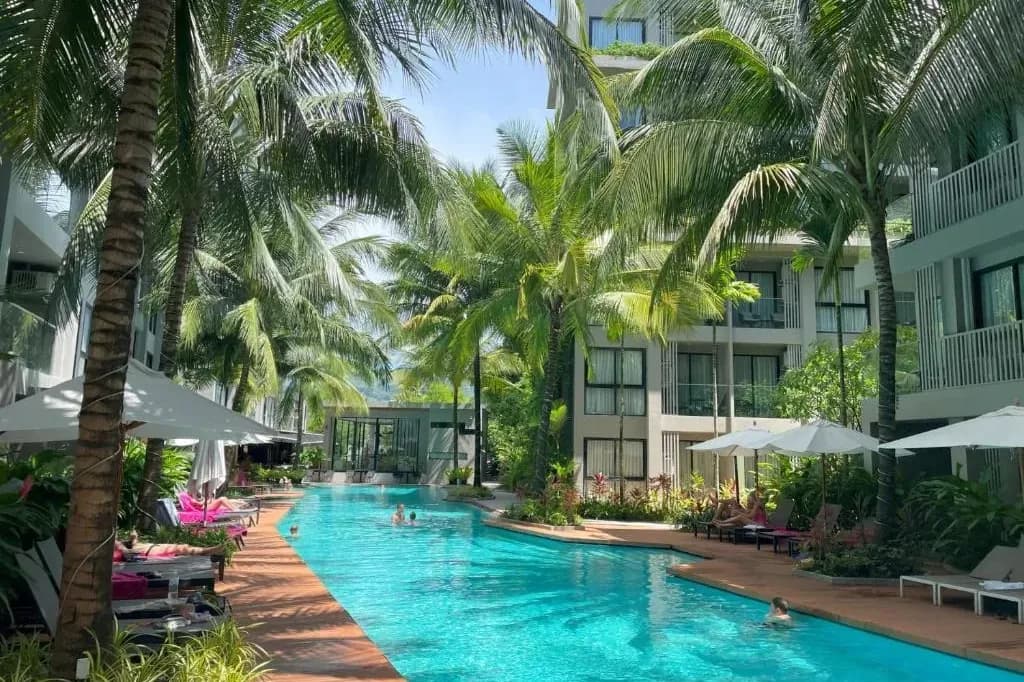
Diamond Condominium near Bang Tao beach, from our sales listings
The short answer
Condo or villa: which one?
A condo can be owned freehold in your own name, within the building’s 49% foreign quota, and is the easier home to resell. A villa means a house in your name on land held through a registered lease of up to 30 years. Condos cost more per m²; villas give space and a published yield.
- Condo, median asking price per m²
- ฿138,000
- Villa, median asking price per m²
- ฿78,000
- Villa, gross rental yield (5.1% net)
- 6.8%
- Villa, median monthly rent (condo: ฿80,000)
- ฿190,000
Market figures are asking prices and rents from our live listings, as of 6 November 2026, before negotiation. They describe the homes we handle, not the whole market, and we publish no condo yield because we do not list enough comparable homes.
Ownership
What you actually own
Thai law separates land from what is built on it. Land is reserved for Thai nationals, while the Condominium Act lets foreigners own apartment units. That one rule shapes the choice.
Freehold within the 49% quota
You hold a unit title deed in your own name, with no time limit. Foreigners together may own up to 49% of a building’s total unit area, in square metres. You must bring the full price in from abroad in foreign currency; for transfers of about USD 50,000 or more, the bank issues an FET form.
House in your name, land on a lease
A foreigner cannot own land. The usual structure is a registered land lease of up to 30 years (usually prepaid for a villa), plus a registered superficies and a building permit that put the house in your name. Only the first 30 years are guaranteed by registration.
“30+30+30” renewals are contractual promises, not registered rights, and a 2023 Supreme Court ruling voided prepaid extensions on a Phuket lease. A 99-year residential lease does not exist under Thai law as of October 2026, and the 75% condo quota is still only a proposal. Judge a villa on its first 30 years.
When a building’s foreign quota is full, a foreigner can still use a unit through a registered lease from a Thai owner, wait for a foreign-quota resale, or choose another building. A Thai friend’s name or a nominee company is not a safe workaround.
Costs
Buying costs and running costs
On a typical resale, transfer-related taxes and fees come to roughly 6% of the value, usually shared between buyer and seller. The two homes differ mostly in recurring costs.
| Condo (freehold) | Villa (leased land) | |
|---|---|---|
| At purchase | 2% transfer fee on the appraised value, often split; seller pays Specific Business Tax (3.3%) or stamp duty (0.5%) and withholding tax | Registered lease: 1% fee plus 0.1% stamp duty on the total rent for the whole term; seller’s taxes apply to the house sale |
| One-off extras | Sinking fund contribution, paid on purchase | Independent lawyer to check title (Chanote), lease and superficies |
| Recurring | Common-area fees billed monthly per m² (security, cleaning, pool, gardens) | You pay for pool, garden, repairs and insurance; gated estates may add estate fees |
| Annual tax | Land and Building Tax, low for residential use | Land and Building Tax, low for residential use; a lease can pass it to the tenant |
For scale, our rental yield calculator assumes ฿60,000 a year of condo or estate fees and ฿40,000 for maintenance, insurance and land and building tax. Those are defaults to adjust, not quotes.
Rental yields
Rental yields and demand
As of 6 November 2026, our villa listings imply about 6.8% gross and 5.1% net. For condos we do not list enough comparable homes for sale and for rent to publish a reliable yield, so we do not quote one.
| Gross yield | Net yield | Median price / monthly rent | |
|---|---|---|---|
| Villa, all sizes | 6.8% | 5.1% | Not shown |
| 3-bedroom villa | 7.9% | 5.9% | ฿23.5M / ฿155,000 |
| 4+ bedroom villa | 6.6% | 5.0% | ฿45.5M / ฿250,000 |
| Condo | Not published | Not published | Not published |
Rents show the gap in size and price. The median villa rents for ฿190,000 a month and the median condo for ฿80,000. Among two-bedroom homes, villas rent for a median of ฿150,000 and condos for ฿75,000; a one-bedroom condo rents for about ฿30,000.
Gross, small condos often yield more, because they rent high relative to their price, but fixed costs weigh more on a small rent, so the gap narrows net. In Thailand, renting for fewer than 30 nights requires a hotel licence or the small-property exemption.
Management
Management: who looks after what
Condo
The juristic person runs the common areas, so you manage only the unit: tenants, furniture, repairs inside.
Villa
The whole property is yours to look after: pool, garden, roof, staff. A manager can take this on, and pool and garden upkeep is sometimes included in a villa’s rent.
The fee
Our calculator assumes 10% of the rent collected for property management. Ask what it covers before you sign.
Resale
Resale and liquidity
A foreign-freehold condo can be sold to any buyer, inherited and mortgaged. A villa lease is a wasting right: its value falls as the remaining years run down.
Condo resale depends on the quota. Selling to a foreigner keeps the unit in the foreign quota; selling to a Thai frees the area from it. In buildings where the quota is nearly full, foreign-freehold units often ask more than Thai-quota units, though there is no official statistic on this premium. Keep your FET form: with it, your bank can send the sale proceeds back abroad in foreign currency.
Villa resale means assigning the remaining lease and selling the house, which needs the contract to allow assignment and a new registration at the Land Office. We publish no time-to-sell figures for either type.
Side by side
Condo vs villa at a glance
| Condo | Villa | |
|---|---|---|
| Ownership | Freehold unit title deed, within the 49% foreign quota | House in your name; land on a registered lease of up to 30 years |
| Term | Permanent | First 30 years guaranteed; renewals are promises |
| Median asking price per m² | ฿138,000 | ฿78,000 |
| Median monthly rent | ฿80,000 | ฿190,000 |
| Published gross yield | None | 6.8% (net 5.1%) |
| Running costs | Common fees per m², sinking fund | Pool, garden, repairs, insurance, estate fees |
| Management | Building handles the common areas | You or a manager handle everything |
| Resale | Any buyer; depends on quota left | Assign the remaining lease; value falls with the years |
| Main risk | Quota full, FET paperwork | Lessor, renewal wording, death and sale clauses |
Who it suits
Which one fits you?
Choose a condo if…
You want permanent ownership you can sell to anyone and pass on, a lock-up-and-leave home, or a simple rental with the building handling the common areas. Check the foreign quota in writing before a deposit.
Choose a villa if…
You need space, a private pool and garden for family life, or you plan to stay 10 to 25 years. Price the lease on its first 30 years, and have an independent Thai lawyer check every clause.
This guide is general information, not financial, legal or tax advice. It reflects Thai law and official practice as we understand them in November 2026. Market figures are asking prices and rents from our listings as of 6 November 2026. Have a licensed Thai property lawyer review your contract before you commit.
FAQ
Condo vs villa — your questions
Short answers for foreign buyers.
Talk to a local expert
Not sure which structure fits?
Tell us your budget, how you will use the home and how long you plan to hold it. We will show matching condos and villas and the real numbers.