
Building guide · Updated October 2026
Building a House in Phuket
What it really costs to build a villa in Phuket in 2026, which land you can build on, the permits a foreign owner needs, how long it takes and how to protect yourself with a contractor — with a full budget for a 3-bedroom pool villa.
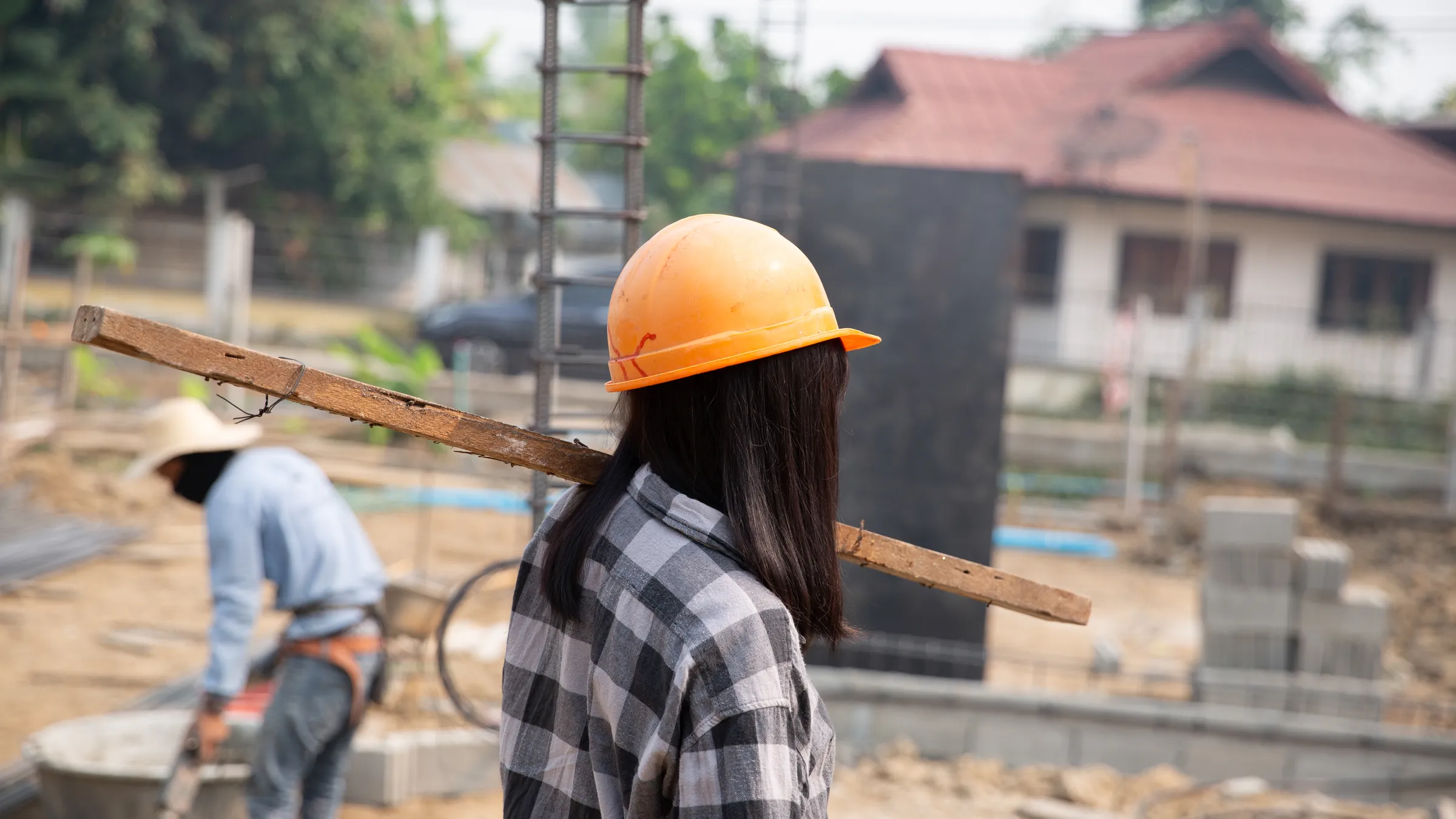
Builders on a house construction site
TL;DR
How much does it cost to build a house in Phuket?
In 2026, building in Phuket costs roughly ฿25,000–30,000 per m² for a basic local build, ฿35,000–45,000 for a good mid-range villa and ฿60,000 or more for luxury, before land. A 3-bedroom pool villa usually totals ฿15–23 million plus land, takes 14–24 months from design to keys, and foreigners build on leased land.
Construction costs are 2025–2026 ranges published by Phuket architects and builders and cross-checked with the national construction cost index (Q3 2026). Land rules reflect Phuket’s hillside regime in force since 14 December 2024; a 2026 draft extension is not yet law. Official land appraisals change on 1 January 2027. We review this guide at least every six months.
- per m², good mid-range villa (2026)
- ฿35–45k
- 3-bed pool villa, before land
- ฿15–23M
- construction on site
- 10–18 mo
- legal permit deadline, extendable twice
- 45 days
The price per m² is only half the story. Pool, landscaping, retaining walls, design fees, utilities, furniture and a contingency typically add 40–70% to the headline construction figure, which is why Phuket architects advise budgeting one and a half to two times the build cost per m² for the whole project. The sections below break each item down, then compare building with buying a finished or off-plan villa.
Foreign owners
Can a foreigner build a house in Phuket?
Yes, but not on land they own. Section 86 of the Land Code bars foreigners from owning land, so a foreigner builds on land leased for up to 30 years and owns the house through a registered superficies (Civil and Commercial Code ss.1410–1416), with the building permit in their own name.
| Route | Who owns the land | Who owns the house | Our view |
|---|---|---|---|
| 30-year lease + superficies | A Thai owner (lessor) | You, through the superficies and your building permit | The standard, lawful route for foreign builders |
| Land in a Thai spouse’s name | Your spouse | Your spouse, or you via a superficies or usufruct | Workable; the land is your spouse’s asset, so plan for death and divorce |
| Genuine Thai company | The company (at least 51% Thai-owned) | The company | Only with real Thai shareholders and a real business — never nominees |
| Section 96 bis | You (max. 1 rai, residential) | You | Requires a ฿40 million qualifying investment and ministerial approval; rarely granted |
A superficies is the right to own buildings on someone else’s land. It is registered at the Land Office on the title deed, can run for a fixed term (up to 30 years, renewable) or for life, and is transferable and inheritable unless the contract says otherwise. Without it, Thai law presumes that whatever stands on the land belongs to the landowner. When a superficies ends, the landowner can choose to buy the building at market value instead of letting you remove it (s.1416), so the contract should say clearly what happens at the end of the term.
The permit application on leased land needs the landowner’s written consent and a copy of the title deed. Get that consent, the registered lease and the superficies in place before construction starts, not after. Our leasehold vs freehold guide explains lease terms, renewals and inheritance; our land titles guide explains why the lease should sit on a Chanote.
Using Thai shareholders or individuals who hold land on paper for a foreigner is illegal: the Land Code (ss.111–113) provides up to two years in prison, a fine of up to ฿20,000 or both, and the land can be ordered sold. On 19 October 2026 the government launched an operation targeting 2,360 plots (about 5,467 rai, ฿14 billion) suspected of being held through 1,397 Thai nominees, with forced sales if holders do not dispose of the land in time.
Choosing the plot
Which land can you build on in Phuket?
Build only on land with a Chanote title, legal road access, utilities nearby and a town-plan zone that allows housing. In Phuket also check elevation (land above 80 m is restricted), slope, distance from the shoreline and protected-zone maps before paying a deposit — a plot that cannot get a permit is worth far less than its price.
| Check | What to look for | Status / rule (October 2026) |
|---|---|---|
| Title deed | Chanote (Nor Sor 4 Jor); Nor Sor 3 Gor only with extra checks | Avoid Sor Kor 1, Por Bor Tor 5 and Sor Por Kor land entirely |
| Road access | Frontage on a public road, or a servitude registered on both deeds (s.1387) | Without legal access, permits, utilities and resale all suffer |
| Elevation 80–140 m | Opened to limited building by a cabinet decision effective 14 December 2024 | Reported conditions: title issued before 2017, one building, max. 6 m high, max. 90 m² footprint, ≥ 70% green space |
| Elevation up to 150 m | A 2026 draft amendment would extend the relaxation to 150 m | Draft — not in force |
| Slope | Under the 2017 rules, no building on slopes of 35% or more; strict limits on 25–35% | Confirm with an engineer’s survey of the plot |
| Coastline | Height and density limits that tighten the closer the plot is to the shore | Depends on the zone; check the environmental notification and town plan |
| Town-plan zone | Yellow = low-density residential, orange = medium, brown = high, red = commercial, green = rural/agricultural | National colour convention; the Phuket plan is under revision |
| EIA | Not required for a single private villa | Required for e.g. hotels or condos of 80+ rooms or 4,000+ m², and housing estates of 500+ plots or 100+ rai |
Hillside land is where most Phuket building plans go wrong. Sea-view plots on Kamala, Kata, Layan or Cape Yamu hills are often above 80 m or on steep ground; the December 2024 relaxation helps some long-held plots, but a single 90 m² house is not the villa most buyers have in mind. Steep sites also cost more to build: retaining walls, piling, drainage and access roads can add 10–20% to the villa’s cost.
Before you commit, ask the municipality (tessaban) or Tambon Administrative Organisation (OrBorTor) in writing what a permit would allow on the plot, and have a licensed surveyor confirm the boundaries, the elevation and the slope. If the project grows into several villas for sale, remember that a land allotment (housing estate) needs its own licence and, above the thresholds, an EIA that can add 6–14 months.
Land prices
How much does building land cost in Phuket?
Land is often the biggest line of the budget. As of October 2026, our inland listings in Thalang and Mai Khao ask about ฿4.5–7.5 million per rai (1,600 m²), small plots near Pasak and Cherng Talay about ฿34–36 million per rai, and prime west-coast beach land was estimated at around ฿80 million per rai in 2024.
| Location (Phuket) | Price | Per rai | Type & date |
|---|---|---|---|
| Near Mission Hills, Thalang (1 rai) | ฿7.5 million | ≈ ฿7.5 million | Our asking price, October 2026 |
| Baan Para, Thalang (5.5 rai) | ฿25 million | ≈ ฿4.5 million | Our asking price, October 2026 |
| Mai Khao (7 rai) | ฿42 million | ≈ ฿6 million | Our asking price, October 2026 |
| Pasak / Cherng Talay (660–700 m² plots) | ฿15 million each | ≈ ฿34–36 million | Our asking prices, October 2026 |
| Thalang district, most roads | ฿15,000–30,000 / sq wah | ≈ ฿6–12 million | Official appraisal, 2023–2026 round |
| Bang Tao, Surin, Karon beach land | — | ≈ ฿80 million | Market estimate, AREA, June 2024 |
For a 3-bedroom pool villa of about 300 m² you need roughly 400–800 m² of land (1 to 2 ngan) for a compact estate-style plot, or a quarter to a half rai for a garden. These are freehold prices: as a foreigner you lease the land, and the lease premium for the whole term is negotiated with the owner and often paid upfront. Official appraised values, used for transfer fees and taxes, are usually below market and are due to be revised on 1 January 2027. Our land titles guide explains the units (rai, ngan, square wah) and the appraisal system; current plots are listed on our land for sale page.
Cost per m²
Construction cost per m² in Phuket (2026)
As of 2026, Phuket builders and architects quote about ฿25,000–30,000 per m² for a basic local build, ฿35,000–45,000 for a professionally built mid-range villa, ฿45,000–60,000 for a premium finish and from ฿60,000 to ฿90,000 or more for luxury. These figures cover the building only, not land, pool, landscaping or fees.
| Finish level | Cost per m² |
|---|---|
| Basic / local standard | ฿25,000–30,000 |
| Mid-range (good standard) | ฿35,000–45,000 |
| Premium | ฿45,000–60,000 |
| Luxury | ฿60,000–90,000+ |
Source: quotes from Phuket builders and architects, 2026, as summarised in this guide. Excludes land, pool, landscaping and fees; ultra-luxury builds exceed ฿100,000 per m².
| Finish level | Cost per m² (THB, 2026) | What you typically get |
|---|---|---|
| Basic / local standard | 25,000–30,000 | Local contractor, Thai-standard materials and fittings, light supervision |
| Mid-range (good standard) | 35,000–45,000 | Engineered structure, aluminium glazing, decent waterproofing, branded sanitary ware, supervised build |
| Premium | 45,000–60,000 | Larger spans and glass, imported finishes, integrated air-conditioning and lighting design |
| Luxury | 60,000–90,000+ | Architect-led design, bespoke joinery, natural stone, home automation; ultra-luxury exceeds ฿100,000 |
Published ranges differ because builders measure differently. Some quote on internal floor area only, others include covered terraces and the pool deck; always ask which area the price per m² applies to and compare quotes on the same bill of quantities. Tender bids on identical drawings commonly vary by 8–15%. Island logistics add only about 0–5% over mainland Thai costs, according to local builders.
Costs are still rising. The Real Estate Information Center (REIC) of the Government Housing Bank reported its standard-house construction cost index up 2.1% year on year in Q3 2026, driven by structural work (+6.2%) and concrete products (+13%). Ask for a fixed-price contract for the structure, and a clear list of provisional sums for finishes you have not yet chosen.
Full budget
What does a 3-bedroom pool villa cost to build?
A 3-bedroom pool villa of about 300 m² at a mid-range finish costs roughly ฿15–23 million in total in 2026, before land: about ฿10.5–13.5 million of construction, plus pool, external works, fees, utilities, furniture and a 10% contingency. Add the land and lease registration to get the full project cost.
| Item | Basis | Estimate (THB, 2026) |
|---|---|---|
| Construction, 300 m² | ฿35,000–45,000 per m² | 10.5–13.5 million |
| Swimming pool | About 3×7 to 4×10 m, with equipment | 0.6–1.5 million |
| External works & landscaping | Driveway, walls, drainage, garden: 10–15% of construction | 1.0–2.0 million |
| Design, engineering & permits | Architect, structural/MEP engineers, soil test, survey: 6–10% | 0.6–1.4 million |
| Utilities & connections | Electricity meter and transformer share, water, septic system — our allowance | 0.2–0.5 million |
| Furniture, appliances & fit-out | 5–15% of construction | 0.5–2.0 million |
| Contingency | About 10% of construction, pool and external works | 1.2–1.7 million |
| Total before land | ≈ 15–23 million |
With land, the same villa on a quarter- to half-rai inland plot in Thalang (about ฿1.5–3.8 million at ฿6–7.5 million per rai) comes to roughly ฿16–26 million; on a 700 m² plot near Pasak or Cherng Talay (about ฿15 million) it reaches ฿30–38 million. A basic local build of 250 m² can come in under ฿10 million before land, while a 450 m² luxury villa easily passes ฿40 million.
Real projects drift upwards. One Phuket architecture firm reports a 325 m² villa in Rawai whose construction rose from ฿12 million at tender to ฿14 million (+16.7%) because of client changes, for a total of ฿20 million with furniture and landscaping. Freezing the design before tender is the cheapest saving you can make.
Permits
Which permits do you need to build a house in Phuket? 7 steps
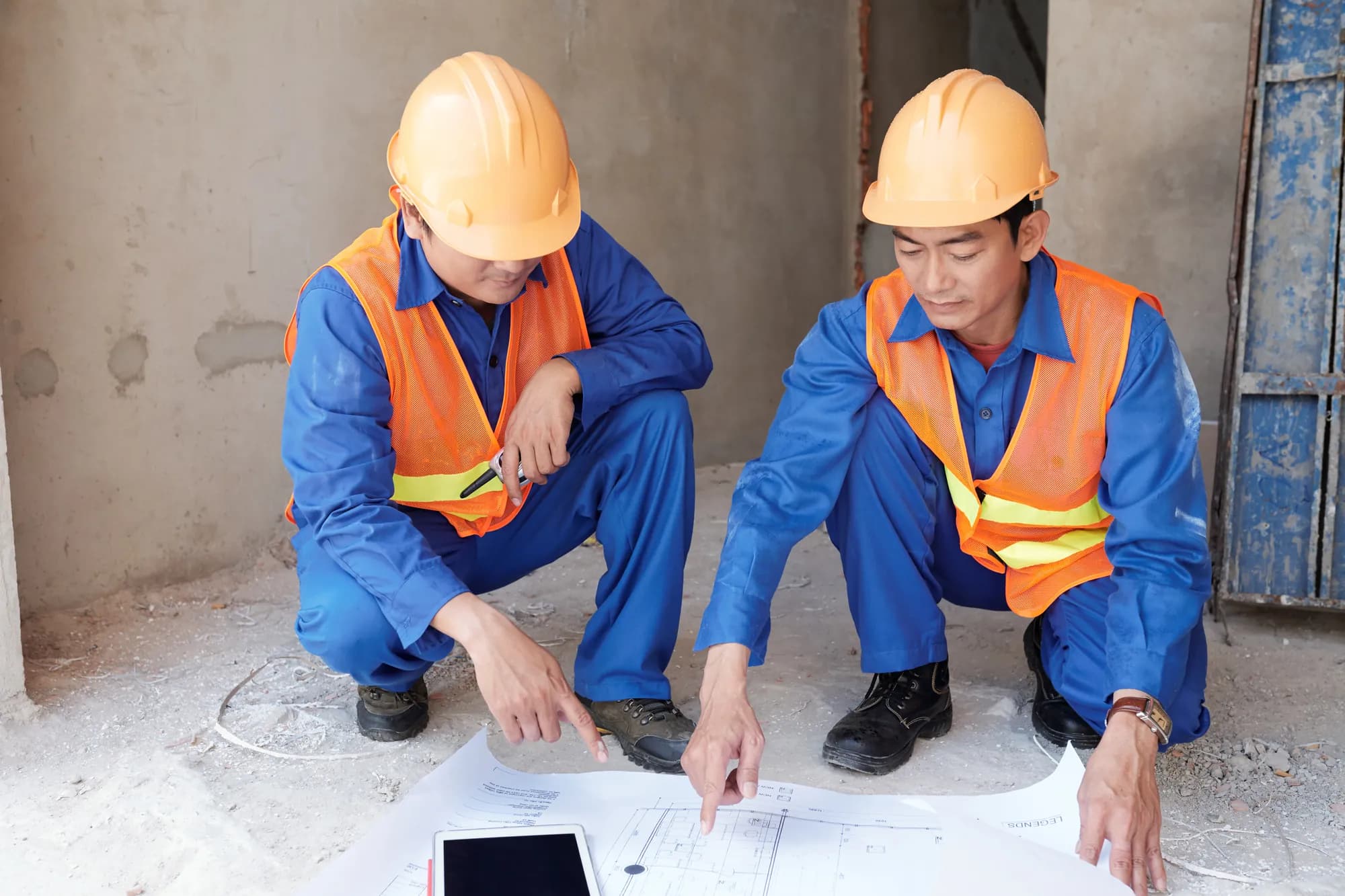
You need a building permit from the local municipality or OrBorTor under the Building Control Act B.E. 2522 (section 21), based on plans signed by Thai-licensed architects and engineers. The authority must decide within 45 days, extendable twice by 45 days. After completion you request a house number and house registration, and connect electricity and water.
Step 1
Secure the land rights
Register the 30-year lease and the superficies at the Land Office, and obtain the landowner’s signed consent and a certified copy of the deed for the permit file.
Step 2
Survey and soil test
A licensed surveyor confirms boundaries, elevation and slope; a soil investigation sizes the foundations, which typically take 8–12% of the construction budget on flat land and more on slopes.
Step 3
Design with licensed professionals
Plans and structural calculations must be prepared and signed by architects and engineers licensed in Thailand (Architect Act B.E. 2543, Engineer Act B.E. 2542). Foreigners cannot hold these licences, so a foreign designer works with a Thai licensed firm.
Step 4
Apply for the building permit
File the plans with the municipality or OrBorTor. Under section 25 it must grant or refuse the permit within 45 days, extendable twice by up to 45 days with written reasons. Some buildings may instead use the notification route of section 39 bis. Ask for the permit in your own name.
Step 5
Build under the permit
Keep the permit and approved plans on site. Building without a permit, or departing from the approved plans, exposes the owner to orders to stop or demolish and to penalties under section 65 of up to three months’ prison, a ฿60,000 fine, plus up to ฿10,000 per day.
Step 6
Connect utilities
Apply to the Provincial Electricity Authority (PEA) for a temporary construction supply and then a permanent meter sized for pool pumps and air-conditioning, and to the Provincial Waterworks Authority (PWA) where mains water exists. Many plots rely on a well: drilling a groundwater well (deeper than 15 m) needs a permit from the Department of Groundwater Resources.
Step 7
House number and Tabien Baan
On completion, the owner requests a house number and a house registration book from the local registration office. Thai nationals are listed in the blue book (Tor Ror 14); a foreign resident can apply for a yellow book (Tor Ror 13), which proves address, not ownership.
The permit fee itself, set by ministerial regulation, is modest for a house; the real costs are the design, engineering and surveys needed to produce a compliant file. Ask the municipality whether an inspection or completion certificate applies to your building type before you move in. Once the house exists, the annual Land and Building Tax applies to the owners of the land and of the building, at low residential rates of roughly 0.02–0.1% of appraised value; the lease can pass the land part to you.
Timeline
How long does it take to build a house in Phuket?
Allow 14–24 months from buying the land to moving in: about 2–4 months for design, 1–4 months for the permit, 10–18 months of construction, and a month for handover and snagging. The monsoon (roughly May to October, heaviest in September–November) slows excavation, structure and waterproofing.
Step 11–2 months
Land due diligence, lease and superficies
What can delay it: Title issues, missing boundary markers, the landowner’s availability
Step 22–4 months
Concept and permit drawings
What can delay it: Design changes, slope or soil surprises
Step 345 days by law, up to 135 days
Building permit
What can delay it: Incomplete file, hillside or coastal review, landowner consent
Step 410–18 months
Construction
What can delay it: Rain, contractor cash-flow, late choice of finishes, imported materials
Step 51 month
Handover and snagging
What can delay it: Waterproofing tests, utility connections, defects list
Contractors
How to pay and protect yourself with a contractor
Pay against verified progress, not dates: a modest deposit, then milestones (foundations, structure, roof, services, finishes), with 5–10% retention held until after handover. Use a bilingual Thai–English contract that names the controlling language, a fixed price for defined work, delay penalties and a written defects warranty.
| Stage (example) | Share of contract | Release condition |
|---|---|---|
| Deposit / mobilisation | 10–15% | Signed contract; ideally against an advance-payment bank guarantee |
| Foundations and ground slab | 10–15% | Inspected by your engineer |
| Structure (columns, beams, upper slabs) | 20–25% | Structure complete and inspected |
| Roof, walls and windows | 15–20% | Building watertight |
| Electrical, plumbing and air-conditioning | 10–15% | Rough-in tested |
| Finishes, pool and external works | 10–15% | Practical completion and snag list |
| Retention | 5–10% | Released after the defects period, once defects are fixed |
Build or buy?
Is it better to build or buy a villa in Phuket?
Building suits buyers who want a specific design, have 18–24 months and can supervise the project. Buying a finished villa is faster and less risky, and an off-plan villa from an established developer sits in between. In 2026, a self-build is usually cheaper per m² than a comparable new villa, but only once land, fees and your time are counted honestly.
| Build your own | Buy off-plan | Buy a finished villa | |
|---|---|---|---|
| Cost | Lowest per m² if well managed; overruns are yours | Developer margin included; staged payments | Market price; negotiable on resales |
| Time to move in | 14–24 months | 12–30 months, depending on the project | Weeks to a few months |
| Main risks | Permits, contractor, budget overrun, your time | Developer delay or default, specification changes | Hidden defects, title and lease terms |
| What you can check | Everything — but you must check it | Developer track record, permits, land title | The actual house, its permit and its history |
| Resale | Bespoke designs can narrow the buyer pool | New stock competes with the next phase | Proven rental and sale comparables |
Buying is smarter when you need the house within a year, live abroad and cannot visit the site regularly, want rental income from the start, or find a resale villa priced near its replacement cost. Building is smarter when you already have a good plot, want something the market does not offer, and can budget a 10% contingency without stress. Our buying off-plan guide explains how to vet a developer, and our villas for sale page shows what finished houses cost today.
With Empire Estates
How we help you build or buy in Phuket
We help you find a buildable plot, check its title, access, elevation and zoning before you commit, and introduce independent lawyers, surveyors, architects and project managers. If a finished or off-plan villa makes more sense for your budget and timing, we will tell you and show you the options.
Buildable land only
We flag hillside, slope, access and title issues before you visit a plot.
Independent professionals
Thai-licensed lawyers, surveyors, architects and engineers who work for you.
Honest budgets
We compare your build budget with what similar finished villas cost on the market.
Build or buy advice
Land, off-plan and resale villas — so you can choose with real numbers.
This guide is general information, not legal, engineering, architectural or tax advice. Costs are indicative 2025–2026 ranges from published sources and our own market experience, not quotes; land prices are our October 2026 asking prices or dated official and market figures. Rules reflect Thai law and Phuket practice as we understand them on 29 October 2026; section numbers refer to unofficial English translations, the Thai text prevails, and Phuket’s environmental rules are being amended. Always have a licensed Thai lawyer, surveyor, architect and engineer check a specific plot and project before you commit.
FAQ
Building a house in Phuket — your questions
Short answers to what self-builders ask us most.
Talk to a local expert
Planning to build? Let us check the plot first
Tell us your budget, the size of house you want and the area you like. We will shortlist buildable plots, check their title and constraints, and show you what comparable finished villas cost — before you commit.
Where to build
Area guides, land and villas
Compare areas on land prices, access and lifestyle, then check current plots and the finished villas your build budget competes with.
North and centre — larger, cheaper plots
Thalang, Mai Khao and Pasak: most of the island’s buildable inland land.
West coast — prime and hillside land
Beach access and views, at the highest land prices and with the strictest slope rules.
South and east — established villa areas
Rawai, Nai Harn, Chalong and Cape Yamu: mature neighbourhoods with many self-built villas.
Listings
Plots and finished homes across the island.
Sources
The legal texts, official bodies, Phuket builders’ published cost ranges and news reports this guide relies on (checked 29 October 2026). English translations of Thai statutes are unofficial; the Thai text prevails. Cost and price figures are dated in the tables above.
- Land Code B.E. 2497 (sections 86, 96 bis and 111–113) — FAOLEX / FAO
- Civil and Commercial Code, sections 1411–1412 (superficies) — Thai Law Online (unofficial translation)
- Civil and Commercial Code, section 1416 (end of a superficies) — Thai Law Online (unofficial translation)
- Civil and Commercial Code, section 600 (contractor’s liability for defects) — Thai Law Online (unofficial translation)
- Construction law in Thailand (Building Control Act ss.21, 25, 39 bis, 65; retention; contracts) — Thai Law Online
- Rights of servitude in Thailand (section 1387) — Thai Law Online
- Thai yellow house book (Tor Ror 13) for foreign residents — Thai Law Online
- Thailand eyes forced sale of 2,360 plots in foreign property crackdown — New Straits Times / AFP (October 2026)
- Thailand moves to force sales of 2,360 land plots held through nominees — Emerhub (October 2026)
- Phuket’s 80-metre development height restriction repealed — C9 Hotelworks
- Phuket’s new environmental rules (slopes, 2017 regime) — C9 Hotelworks
- Draft amendment to Phuket’s environmental protection zones (2026) — Daily News
- EIA thresholds for condominiums, hotels and housing estates — Checkraka (March 2023)
- Phuket villa build cost 2026: architect’s guide — Architect Phuket (builder-published ranges, 2026)
- Construction costs in Phuket 2026: villa, condo and resort — KZ Architecture & Design (builder-published ranges, 2026)
- Cost to build a villa in Phuket vs Samui vs Koh Phangan (price per m²) — Thaim To Build (August 2025)
- REIC standard-house construction cost index, Q3 2026 — Bangkok Biznews (REIC, Government Housing Bank data) (October 2026)
- Patong beachfront tops official land appraisal values — The Phuket News (2023–2026 appraisal round)
- Phuket land prices by area (AREA survey) — The Nation (June 2024)
- Official land appraisal lookup — Treasury Department
- New electricity connections — Provincial Electricity Authority (PEA)
- Water supply connections — Provincial Waterworks Authority (PWA)
- Groundwater well permits — Department of Groundwater Resources